
Last updated November 2, 2026
 Sweep & inspection
 Caps & crowns
 Flue relining
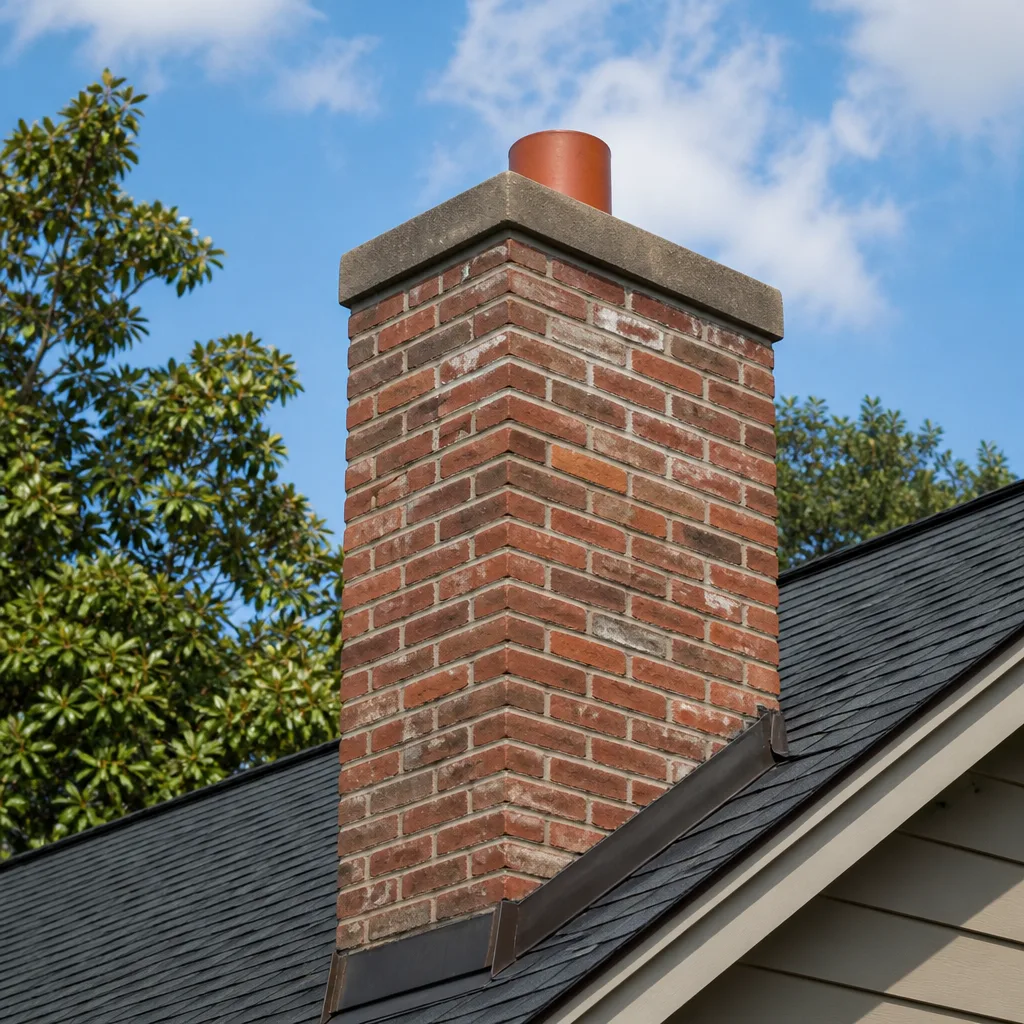 Masonry repair
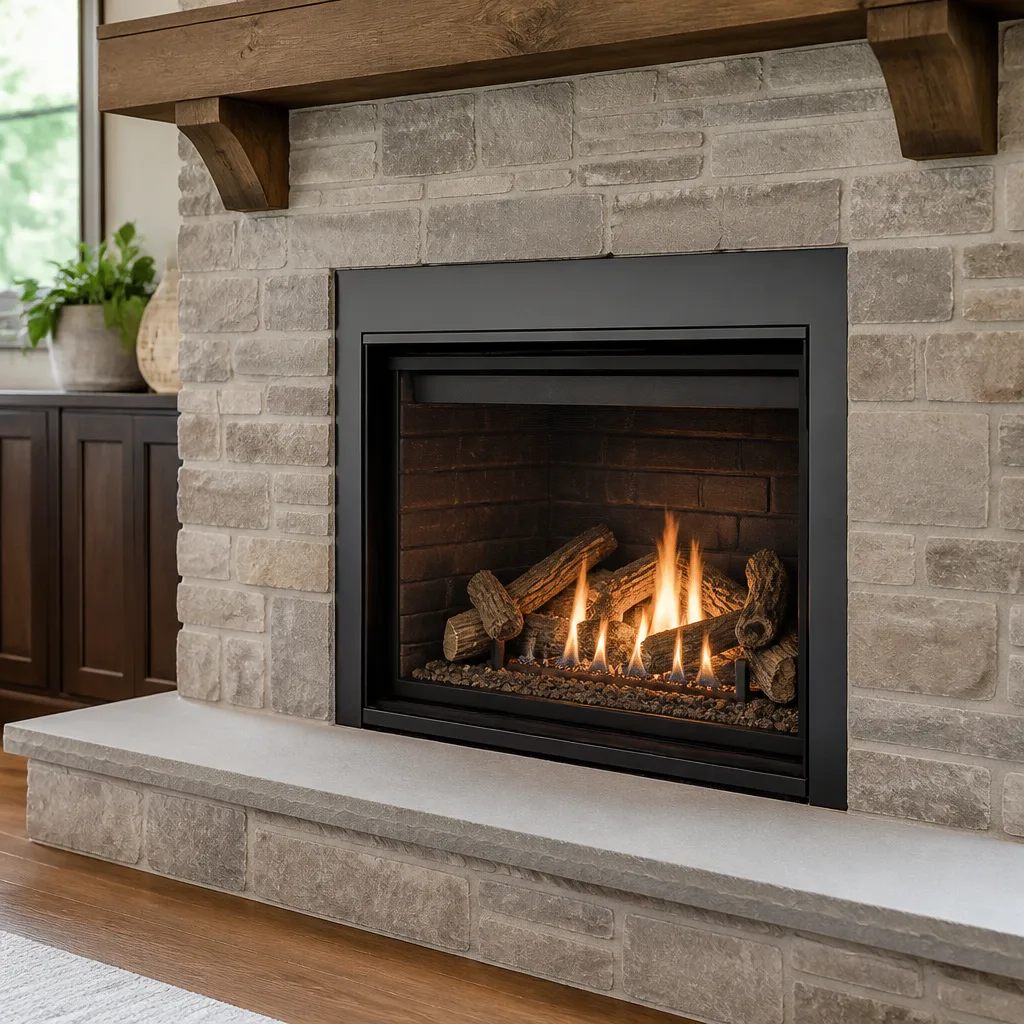 Gas fireplace service
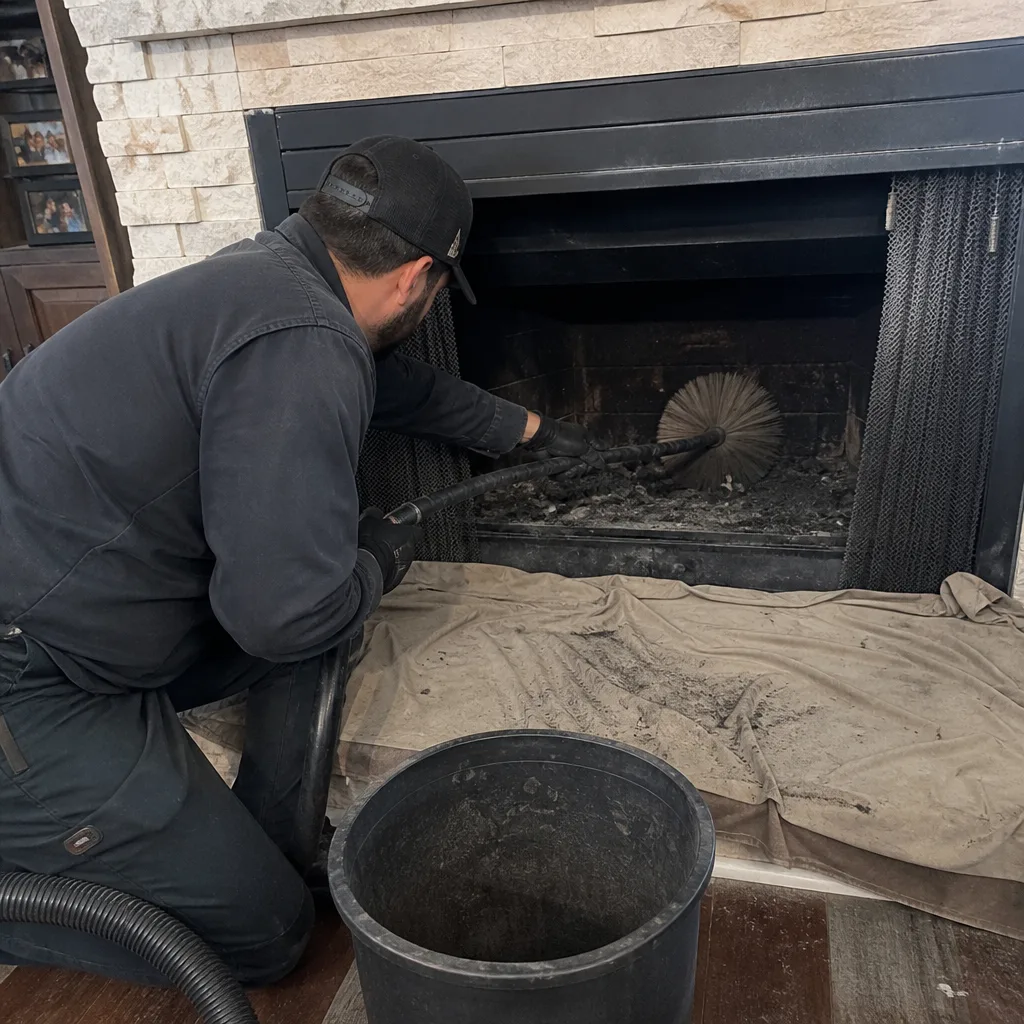
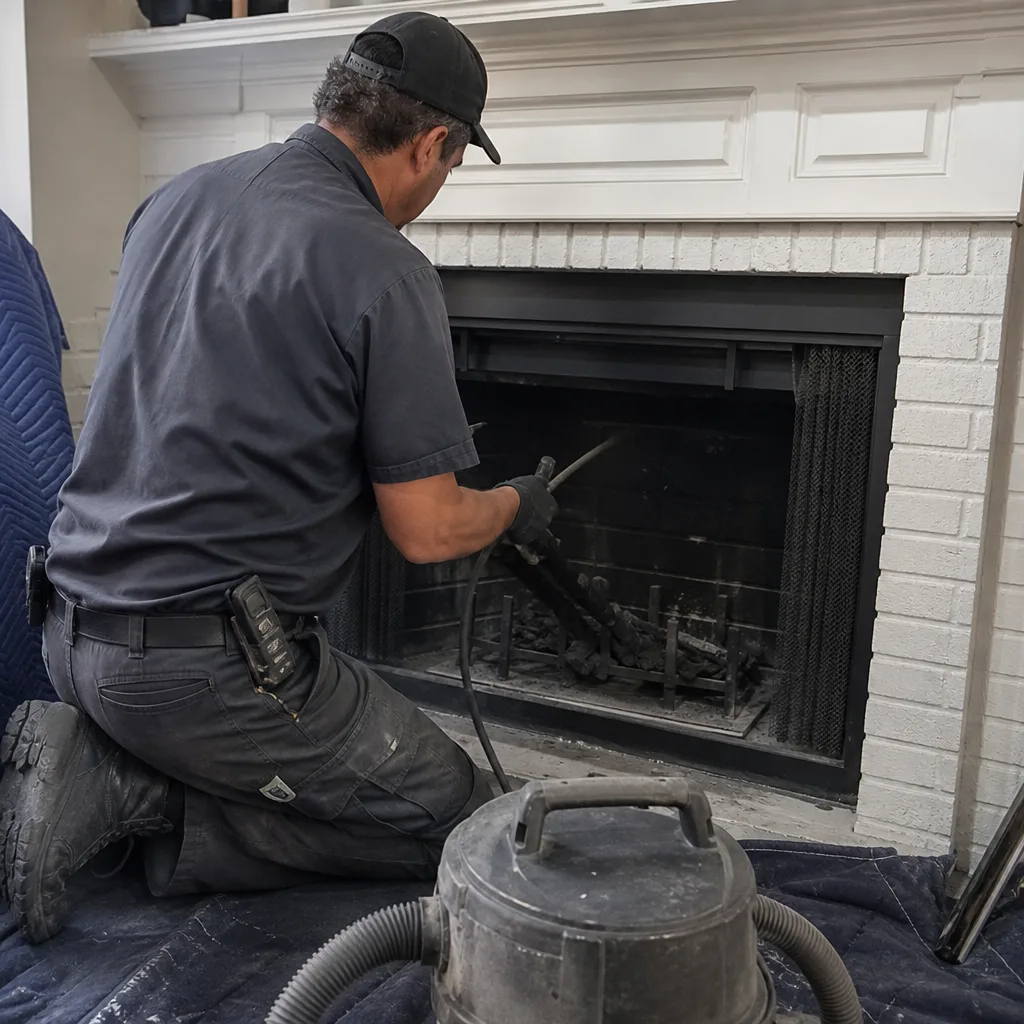
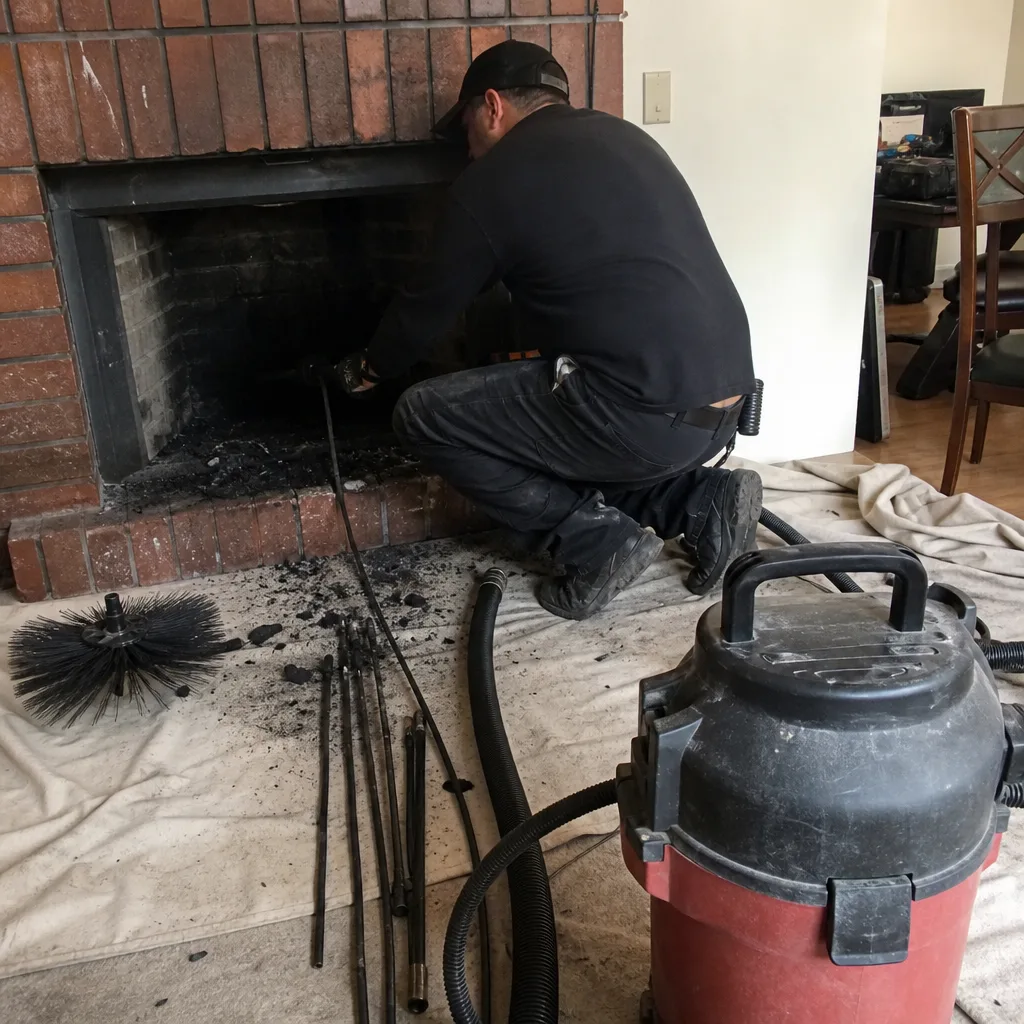
Level 1 sweep and inspection to the NFPA 211 annual standard - flue, crown, cap, and flashing checked and photographed
Chimney sweep logs do not sweep chimneys. They loosen some creosote - which then falls where a brush and vacuum still have to collect it.
Chimney Sweep Troubleshooting: Common Problems and How to Fix Them
Spraying a smoky fireplace with a draft-inducing product is one of the most common DIY “fixes” we hear about in Vista, and one of the most reliable ways to push a creosote or animal-blockage problem deeper into the flue where it becomes a fire waiting for the right night. Homeowners call us after weeks of tinkering with dampers, fans, and chimney-top caps, frustrated that the smoke still rolls into the living room. This guide walks through the actual diagnostic process we use on service calls, so you can tell the difference between a nuisance you can monitor and a condition that takes your fireplace out of service until it’s repaired.
Quick Answer
Chimney problems break into four symptom categories: smoke entering the room, odors with no visible smoke, staining or moisture inside the firebox, and poor draft that comes and goes with weather. Each symptom points to a different part of the system, and treating the wrong one, like sealing a damp chimney without addressing the liner crack behind it, makes the underlying hazard worse. Most problems that present as “draft issues” are actually liner, cap, or moisture problems that a Chimney Sweep and inspect visit can diagnose in under an hour.
Styles & brands we work with
- Sweep & inspection
- Caps & crowns
- Flue relining
- Masonry repair
- Gas fireplace service
Table of Contents
- Smoke in the Room: Diagnosing the Source
- Chimney Odors with No Visible Smoke
- Water in the Firebox and Visible Staining
- Draft Problems That Come and Go
- Negative Air Pressure in Modern Vista Homes
- Liner Problems vs. Draft Problems: How to Tell
- Monitor vs. Take Out of Service: A Decision Guide
- Common Mistakes to Avoid
- When to Call a Professional
- Frequently Asked Questions
Smoke in the Room: Diagnosing the Source
Smoke entering the living space is the most common complaint we hear from Vista homeowners, and it has at least seven distinct causes. Walking through them in order saves time and prevents spending money on a fix that doesn’t match the problem.
The first question is whether the smoke appears immediately on lighting or builds after ten to fifteen minutes. Immediate smoke usually points to a cold flue, a closed or partially closed damper, or a blockage near the top. Smoke that develops later suggests the fire is starving for combustion air as the room seals itself, or that creosote buildup has narrowed the flue enough to change draft dynamics once it heats up.
Here’s the diagnostic map we use, in order of likelihood for a standard masonry chimney in Vista:
- Damper not fully open. The most common cause. Check that the damper plate swings fully clear of the throat. A warped damper from years of heat can look open but still obstruct 40% of the opening.
- Cold flue on a cold morning. Inland Vista nights drop into the 40s. A masonry chimney that has cooled all night holds a dense column of cold air that resists the upward pull of a new fire. Prime the flue by holding a lit rolled newspaper at the open damper for 60 seconds before lighting the main fire.
- Creosote narrowing the flue. Creosote buildup above ⅛ inch is a code-1 fire hazard. More relevant to smoke complaints, heavy glaze can reduce a 12-inch flue to an effective 6-inch opening, which kills the draft it was sized for.
- Animal nesting or debris. Birds, squirrels, and raccoons build in uncapped or damaged-cap chimneys throughout San Diego County. A nest near the top produces smoke backup that appears “for no reason” and often comes with a scratching or chirping sound.
- Flue tile cracked or shifted. A broken tile can partially collapse into the flue passage, creating a restriction that behaves exactly like a blockage. This one is not fixable with a cleaning and may require a stainless liner.
- Downstairs exhaust competition. Running a kitchen vent hood, bathroom fan, or clothes dryer during a fire can pull more than the room can supply, reversing the chimney draft. This is the negative air pressure problem covered in depth below.
- Leaky house-to-flue gap at the damper. A damaged or missing damper seal lets room air bypass the fire and rush directly up the flue, stealing the draft the fire needs.
If you’ve checked the damper and primed the flue, and the smoke still rolls in, the next step is a camera inspection of the flue interior. That’s a service we provide as part of every chimney sweep in Vista, and it turns the guessing into a photo you can see yourself.
Chimney Odors with No Visible Smoke
A fireplace that smells bad when there’s no fire burning, especially during summer months, is almost always a moisture-plus-creosote reaction. Vista’s coastal-inland climate produces damp marine air through June mornings and the characteristic Santa Ana dry heat from September to November. Both patterns drive the smell. Here’s the chemistry: creosote deposits are a tar-rich organic residue. When humidity rises, the creosote film absorbs moisture and releases volatile organic compounds, the source of the smell. Dry air does the opposite but still off-gasses from accumulated deposits on hot afternoons.
In our experience serving Vista, the summer chimney smell intensifies in homes with air conditioning. Here’s why that matters: a sealed, air-conditioned house tends to run at slightly negative pressure relative to the outdoors. That pressure differential pulls air down through the chimney, carrying the creosote smell into the room instead of letting it disperse upward. Homeowners in newer Vista subdivisions with tight construction and central air report this smell more frequently than owners of older, leakier houses.
What we look for when we get called out for chimney smell in Vista:
- Glazed creosote on the flue walls. This dense, shiny residue is the strongest odor producer and the hardest to remove with a routine sweep.
- Water penetration through a cracked crown. Water that makes direct contact with deposited creosote multiplies the smell output by orders of magnitude.
- Rain cap missing or damaged. A missing cap in a marine-influenced climate introduces regular moisture into the creosote load.
- Ash accumulation in the smoke shelf. This is a hidden ridge above the visible firebox where ash and creosote debris settle and hold moisture through the season.
A routine sweep removes the fuel that creates the smell. But if the underlying water entry isn’t fixed, the smell returns within one season. That’s the difference between a cleaning-only company and a repair company: we can sweep the flue and then correct the moisture source at the crown or cap in the same visit. Chimney sweeping in Vista regularly includes finding water entry points that the homeowner didn’t know existed because the rain arrives in short, intense bursts that disguise a slow drip.
Water in the Firebox and Visible Staining
Water in the firebox is never normal and never something to ignore. The source falls into one of four categories, and each has a different fix. In our service area east of the 5 and south of the 78, the typical Vista residential chimney is a masonry structure with a clay tile flue and a poured concrete crown. Age, seismic settling, and occasional frost cycles all contribute to deterioration.
The most common source we document:
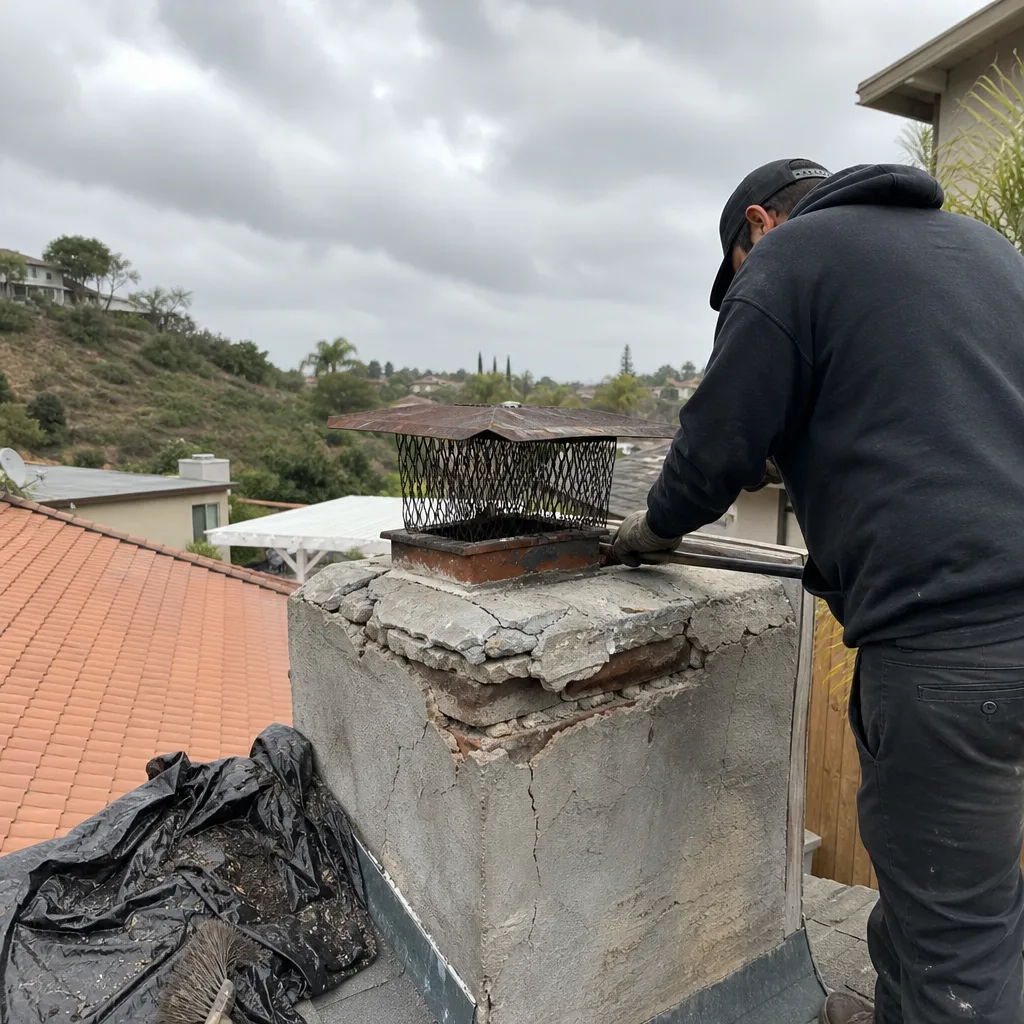
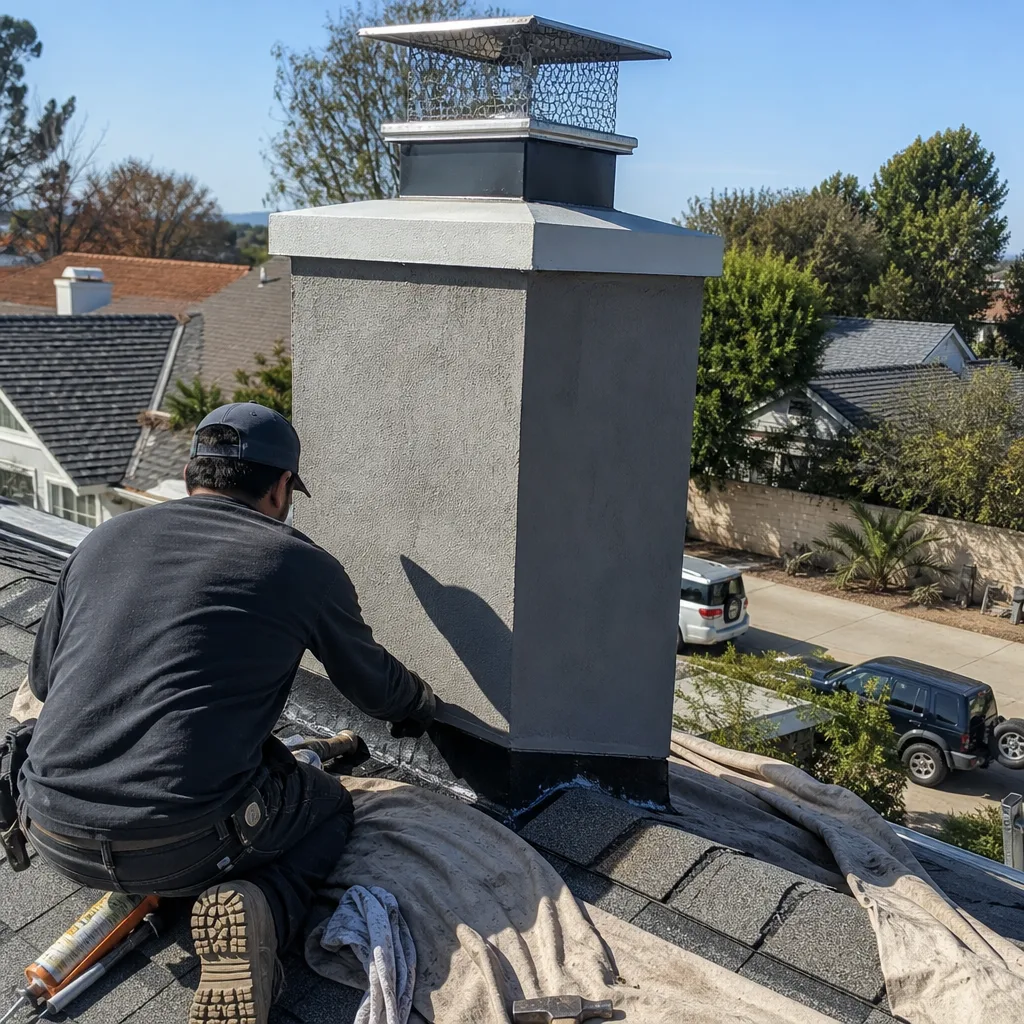
- Cracked or spalled crown. The concrete crown is the flat cap at the top of the masonry chimney. Cracks larger than hairline width admit water into the internal structure. In Vista’s alternating wet winters and hot summers, small cracks expand and contract, deepening every year.
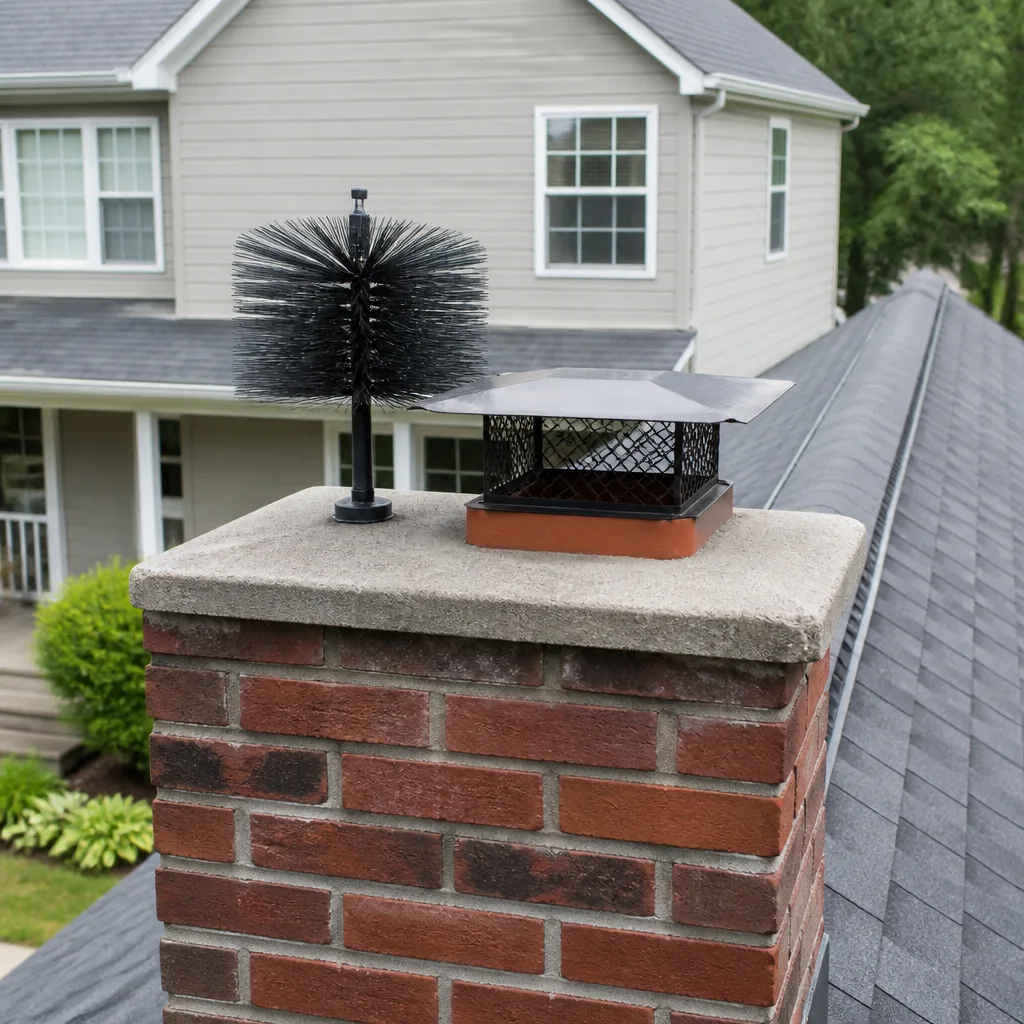
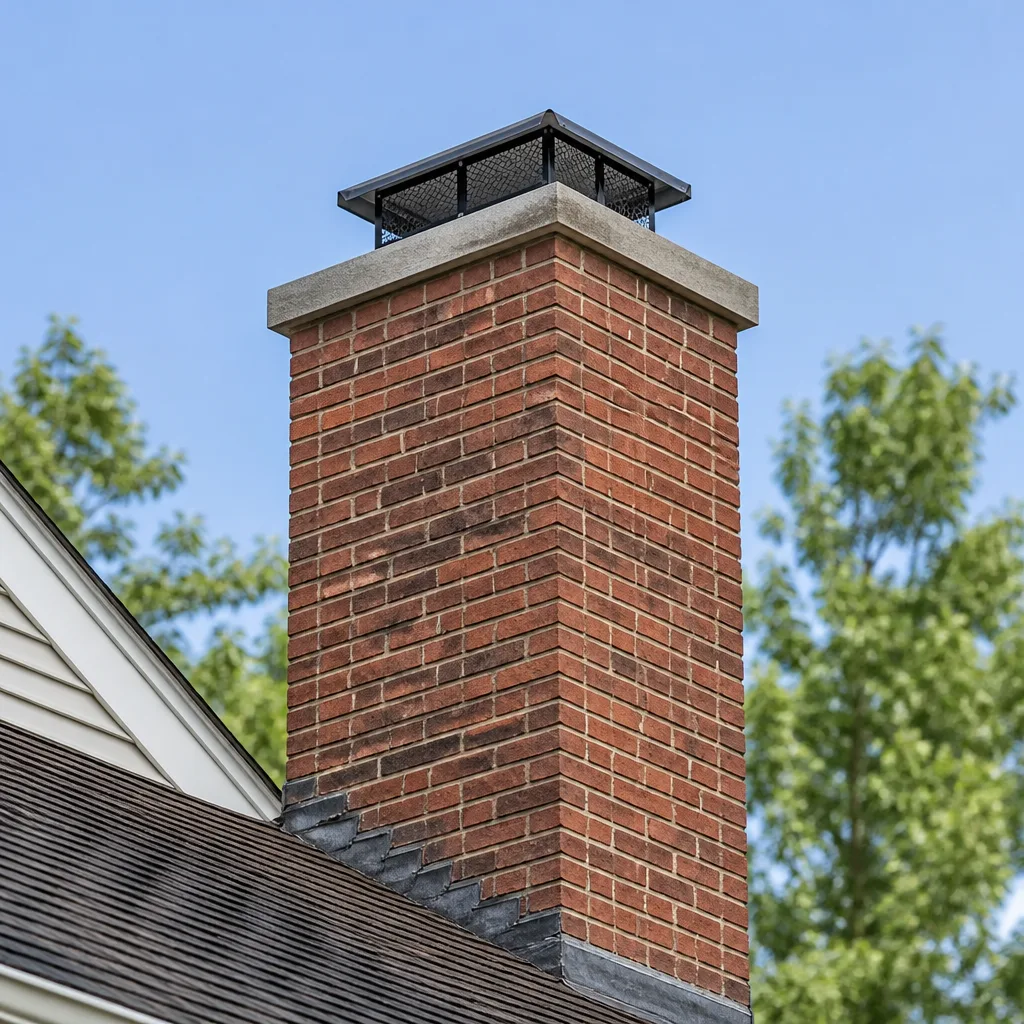
- Missing or failed chimney cap. Without a proper cap, rain falls directly into the flue opening. A standard chimney cap with a mesh screen is the baseline fix. We install Gelco covers among others because their stainless construction holds up to marine air without pitting.
- Damaged flashing at the roofline. Where the chimney intersects the roof, step and counter-flashing form the water barrier. Nail pop-ups, missing shingle tabs, or old tar sealant all fail eventually, and the water tracks down the outside of the flue into the firebox.
- Interior condensation. A high-efficiency gas insert vented through an old clay tile liner that was sized for a wood fire can struggle with warm, moist exhaust. The moisture condenses on the cold tile walls and drips back down into the firebox. This is a liner-sizing problem, not a leak.
The visible clues map cleanly: staining on the firebox back wall suggests water entering from the top through the flue. Staining around the damper or smoke shelf points to cap or crown failure. Dampness at the firebox floor corners with a dry interior upper section indicates flashing failure at the roof. A chimney that weeps a dark stain on the exterior masonry is usually a crown or mortar issue allowing water into the brick matrix.
One point worth making clearly: if water is entering through a crack that has been there for years, the internal flue tile is almost certainly compromised as well. The right repair is not always visible from the ground. That’s why our chimney repair in Vista service includes camera documentation before any repair recommendation, so you can see the condition we’re quoting rather than taking our word for it.
Draft Problems That Come and Go
Intermittent draft problems are the most confusing for homeowners because the same fire behaves differently on different nights. The key to troubleshooting this is keeping a simple log: what’s the outside temperature, is the wind blowing and from which direction, what time of day, and what other appliances were running. That data narrows the causes quickly.
Here are the patterns we look for and what they typically mean in Vista:
- Draft fails only on calm, hot summer evenings but works fine in winter. This is thermal inversion. The flue interior is warmer than the outside air, normal in summer, and the hot, lightweight air simply sits in the chimney instead of rising. The same chimney that draws beautifully in January refuses in August. This is a physics problem, not a blockage.
- Draft fails when the wind blows from a specific direction, usually west or southwest from the ocean. The chimney top sits in a low-pressure eddy created by the roof, neighboring structures, or nearby trees. The fix is often a taller cap, a vacuum-style cap, or a chimney-top extension to put the termination above the turbulence.
- Draft fails only when you run the kitchen exhaust or the dryer. The house is going negative. More on this below because it’s the most common “mystery” draft issue we diagnose in modern Vista homes.
- Draft fails on every fire regardless of conditions. This points to a real physical problem: significant creosote narrowing, a collapsed flue tile, animal nesting, or an undersized flue for the firebox opening.
- Draft starts well then weakens after an hour. As the fire consumes available oxygen in a tightly sealed house, the chimney no longer has enough supply air to pull. The room pressure drops and the draft slows. This is increasingly common in homes built after 2000 in Vista and is an air-supply problem, not a chimney problem.
We recommend homeowners log at least four to five fires with notes on conditions. The pattern almost always reveals itself. And when the pattern points to a physical problem inside the flue, the camera inspection gives a definitive answer instead of another guess.
Negative Air Pressure in Modern Vista Homes
Negative air pressure is the single most underdiagnosed cause of chimney draft failure in Vista homes built within the last fifteen to twenty years. Newer construction is more airtight, double-hung windows seal better, and whole-house fans and central HVAC systems run more often. Every cubic foot of air exhausted from the home must be replaced, and if the house is sealed tight, the replacement air gets pulled down the easiest opening, which is usually the chimney flue.
Here’s the test we teach homeowners before they call us: on a day with the fireplace cold and no fire planned, close all doors and windows, turn on every exhaust appliance you have, the kitchen vent hood, both bathroom fans, the clothes dryer if it’s vented indoors for winter heat recovery, and the central air handler fan. Light a match or incense stick near the fireplace opening with the damper open. Watch the smoke. If it pulls into the fireplace and up the flue, the house is going negative. That’s your backdraft mechanism.
The fix depends on the house. Older Vista homes with leaky construction and single-pane windows rarely need anything beyond cracking a window during the fire. Newer homes may benefit from a dedicated combustion-air supply: a passive vent from the crawlspace or exterior wall near the fireplace that allows make-up air to enter without chilling the living space. This is not a chimney cleaning issue. It’s a building-science issue, but it presents identically to a blockage, which is why homeowners chase the wrong solution for years.
A trained chimney technician can differentiate between negative pressure backdrafting and a real flue obstruction in about ten minutes with a basic draft test and a camera inspection. That’s a routine part of every service visit we make in Vista. If you’re dealing with a fireplace that backdrafts only when the HVAC runs, the likely fix is simple, and no amount of sweeping will change it. What it needs is make-up air, not more cleaning.
Liner Problems vs. Draft Problems: How to Tell
The distinction that saves homeowners the most money is between a removable draft problem, fixed with a cap, a damper adjustment, or a make-up air vent, and a flue liner problem that requires repair before the next fire. Confuse the two and you either spend on unnecessary “remedial” products or smoke out the living room for another season.
Here’s the practical separation we use on every Vista service call:
Likely a draft problem, and solvable without major repair:
- Smoke appears only when other exhaust appliances run.
- Draft fails only in specific weather or temperature conditions.
- The damper opens fully and visibly with no obstruction.
- The chimney cap is missing or clearly undersized, and the issue started when the cap was changed or removed.
- A camera inspection shows no cracks, no voids, no scaling, and less than ⅛ inch of creosote.
Likely a liner problem requiring repair before continued use:
- Visible flue tile fragments in the firebox after rain or during cleaning.
- Camera footage shows a vertical crack longer than the flue tile width, separation at the tile joints, or spalling tile surface that has begun to flake onto the smoke shelf.
- The chimney was built before 1940 and never relined. Pre-war construction in parts of older Vista used unlined masonry directly against the brick shell, which is a fire hazard by modern code.
- The fireplace served a wood fire for decades and now vents a gas log set. The old tile is likely glazed with creosote from the wood-burning years and is not rated for the chemical profile of gas combustion products.
- Water penetration has been ongoing for more than one season, which almost always damages the tile liner’s mechanical integrity.
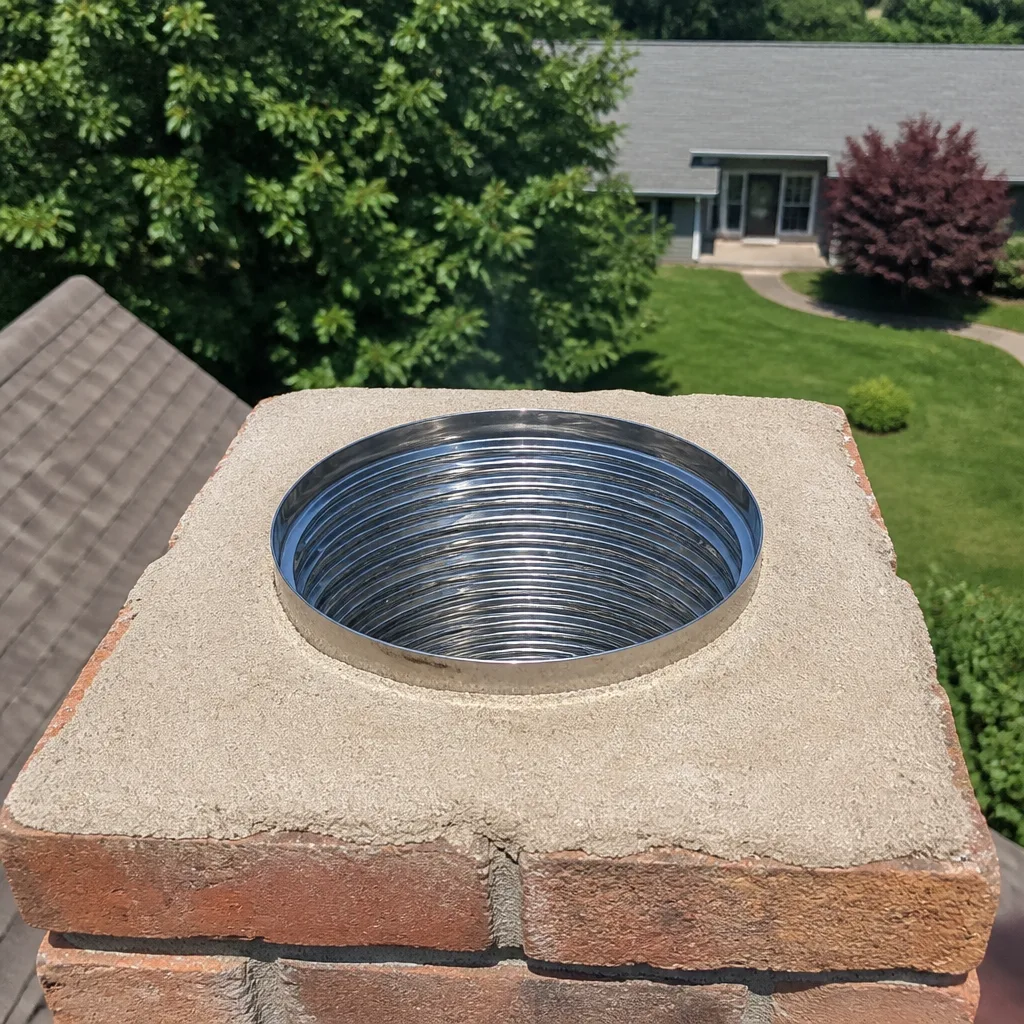
When a liner fails, the repair involves installing a stainless steel liner system or applying a ceramic restoration product. We stock and install DuraFlex stainless liner systems because they are the same product specified on commercial chimney engineering plans, and because the material is available locally without the lead times other vendors run. A cracked tile liner can’t be patched. It gets replaced or restored in place, and the difference depends on the firebox dimensions and the condition of the surrounding masonry. That’s the point where a repair specialist, not a cleaning crew, earns their keep. That’s what our service model in Vista is built for. Millbrook Chimney Sweep home services are built for this full arc, inspection, cleaning, repair, all in one call.
Monitor vs. Take Out of Service: A Decision Guide
Not every chimney problem demands an immediate shutdown. Some conditions can be safely monitored through a season and addressed in spring. Others need the fireplace taken out of service until repair. Knowing which is which prevents both panic and a house fire. This is the decision framework we use on service calls in Vista, and it’s a practical thing to apply at home.
Safe to monitor with regular use through this season:
- Creosote buildup under ⅛ inch with a documented sweep within the last twelve months. Schedule the next sweep for the spring and continue using the fireplace normally.
- A damp firebox smell in summer that hasn’t been accompanied by visible water staining. Book a sweep and cap inspection, but no immediate shutdown is required.
- Draft issues that occur only when the house is running negative. Crack a window during the next fire. The chimney itself isn’t the problem.
- Hairline crown cracks that haven’t shown interior water evidence. Monitor through the next rain season with a firebox check after each storm.
Take the fireplace out of service and do not use it until repaired:
- Glazed or puffy creosote in any amount. This is the fuel that drives chimney fires. A single hot fire in this condition can ignite the flue contents.
- Any visible flue tile crack, shift, or missing section found during inspection or cleaning.
- Water entering the firebox in any visible amount. Moisture plus creosote plus active fire is a precarious combination and the water itself damages liner integrity further.
- Any animal nesting or animal accumulation in the flue, whether the animal is present or not. Nests are extremely flammable and burn hot and fast.
- Smoke entering the room from a source other than an obvious, quickly corrected damper issue.
The rule of thumb in Vista is honest: when in doubt, don’t light the fire. A one-visit inspection settles the question with a camera, and we’ve never had a homeowner regret choosing to look. Regret runs the other direction.
Common Mistakes to Avoid
- Spraying a draft-inducing chemical into the firebox to “fix” backdrafting. These products coat the flue surface and are not a substitute for narrowing down whether the problem is pressure-driven or obstruction-driven. They often bake onto glazed creosote and make the next sweep harder.
- Lighting a fire in a fireplace you haven’t inspected in more than twelve months. In Vista’s mild winters, fireplaces sit unused for months. That idle time is when moisture damage and nest-building happen. The season’s first fire should follow an inspection, not precede it.
- Burning unseasoned firewood because it’s what’s available. Wet or green wood produces lower-temperature fires that condense creosote quickly. In Vista’s coastal humidity, properly seasoned wood that reads under 20% moisture on a wooden moisture meter is essential.
- Closing the damper while embers are still glowing. The fire looks out but isn’t. The smoldering stage produces high-residue smoke that coats the flue and the smoke shelf with the worst kind of creosote.
- Installing a smaller chimney cap to “boost draft.” This is the opposite of how flue sizing works. A restrictive cap on an already-marginal flue worsens the problem and often produces smoke backup within the first twenty minutes of a fire.
- Ignoring a chimney smell as a summer nuisance. The smell itself is not the hazard. The hazard is the moisture pathway that produces the smell, and the same pathway is degrading your liner. The smell is a reporting signal.
- Hiring a cleaning-only company to fix a structural issue. If the camera shows a damaged flue, the fireplace doesn’t need another sweep. It needs a liner repair, and the sweep will not change that fact.
When to Call a Professional
Call a professional when the problem involves a flue obstruction, a structural question, or a moisture source inside the chimney system. Specifically: smoke entering the room after you’ve verified the damper is fully open, any visible water in the firebox, a fireplace that hasn’t been inspected in more than a year and is about to enter regular use, any animal evidence, or a chimney smell that persists after a routine sweep. These are not things to troubleshoot with products or patience. Millbrook Chimney Sweep offers free estimates in Vista, call (833) 589-9711, and we’ll inspect with a camera so you see the condition before any work is quoted. We also handle dryer vent cleaning in Vista as part of the same service model, because the same pressure and moisture dynamics that cause chimney problems also apply to dryer exhausts.
Frequently Asked Questions
A standard chimney sweep and inspection in Vista typically ranges from $180 to $300 depending on flue condition, fireplace type, and whether the chimney has been recently maintained. Added factors include the degree of creosote glaze, roof accessibility, and whether animal removal is required. Call (833) 589-9711 for a precise quote based on your fireplace. Estimates are free.
A crack in a clay tile flue liner is a fire-code violation under NFPA 211, and the surrounding masonry structure is not rated for direct fire exposure. The size and location of the crack matter, and camera inspection tells us whether a stainless liner or a restoration product is the right fix. You should see the camera footage before you decide anything. We always show it to you.
The National Fire Protection Association recommends a sweep and inspection at the start of every burning season, and at any point creosote buildup reaches ⅛ inch. In practice for Vista homeowners, that’s once a year if you burn regularly through the winter, and once every two years if the fireplace is used occasionally.
Creosote accumulates on the flue walls in layers. Once it exceeds ⅛ inch, a single hot fire can ignite the deposits and produce a chimney fire that burns at temperatures over 2,000 degrees. The visible signs are a loud roaring sound, dense smoke from the chimney top, and flames shooting from the termination. Even if the chimney fire doesn’t spread to the house, it typically cracks the flue liner and requires a repair before further use.
Summer chimney smell is almost always moisture-activated creosote off-gassing. Vista’s coastal humidity saturates the deposited creosote, and the house’s air-conditioned negative pressure pulls that vapor down into the living space. The fix is two-part: sweep the creosote fuel, then seal the moisture pathway at the crown or cap.
Yes, if the backdraft is caused by negative house pressure. Opening a window near the fireplace equalizes the pressure and often restores the draft within a minute. If the backdraft persists with the window open, you’re dealing with a flue obstruction, a liner restriction, or a wind-induced eddy at the chimney top, and that requires an inspection.
The Bottom Line
Chimney troubleshooting works because the symptoms are honest. Smoke in the room, summer smell, intermittent draft, firebox water, each one points to a specific part of the system, and the right diagnostic sequence finds the cause quickly. What matters is treating the real source rather than the symptom. In Vista, where modern sealed construction meets older masonry chimneys, the interaction between house pressure, marine moisture, and flue condition produces a specific set of problems that a generic chimney guide doesn’t address well. If this guide helped you identify your issue, check out our more guides & resources, or schedule a camera inspection to confirm it. We’re glad to help with that.
Written by the team at Millbrook Chimney Sweep, serving Vista since 2014.
See the difference
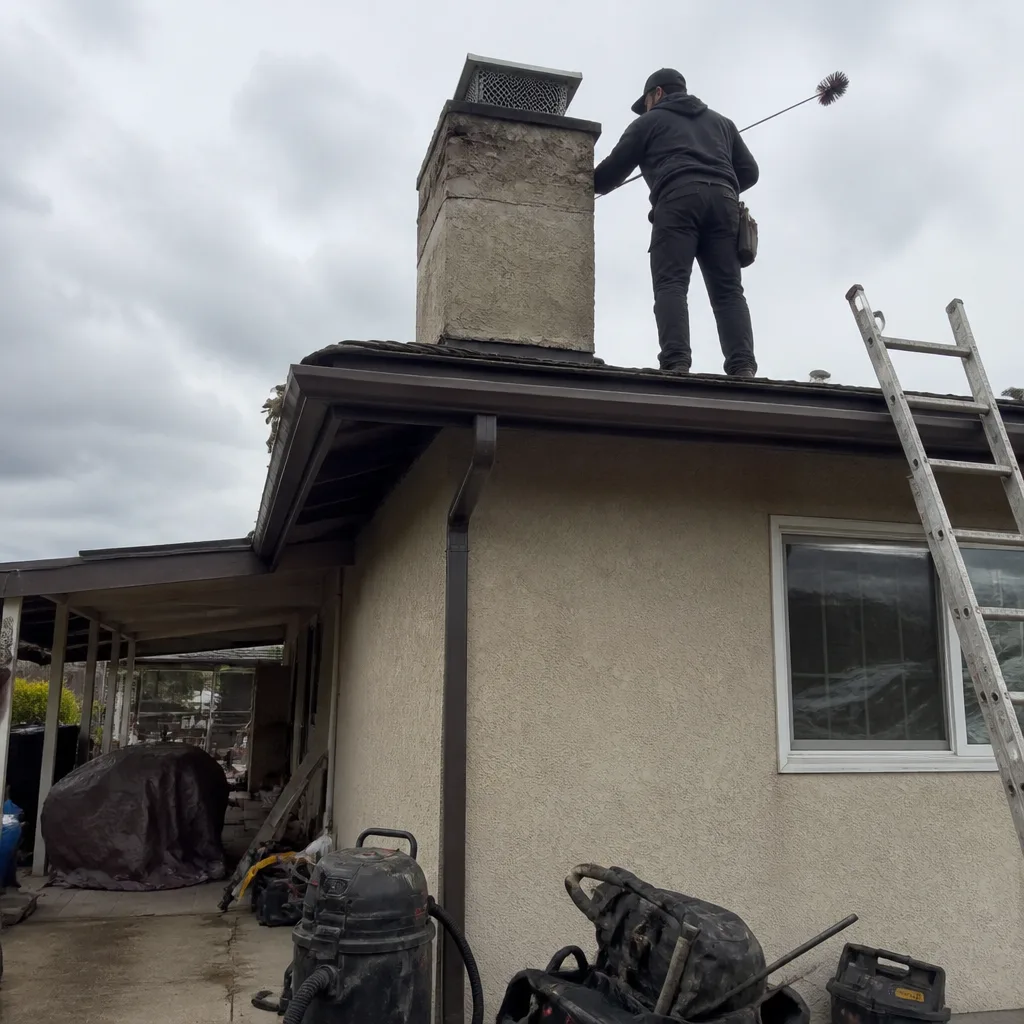 Before
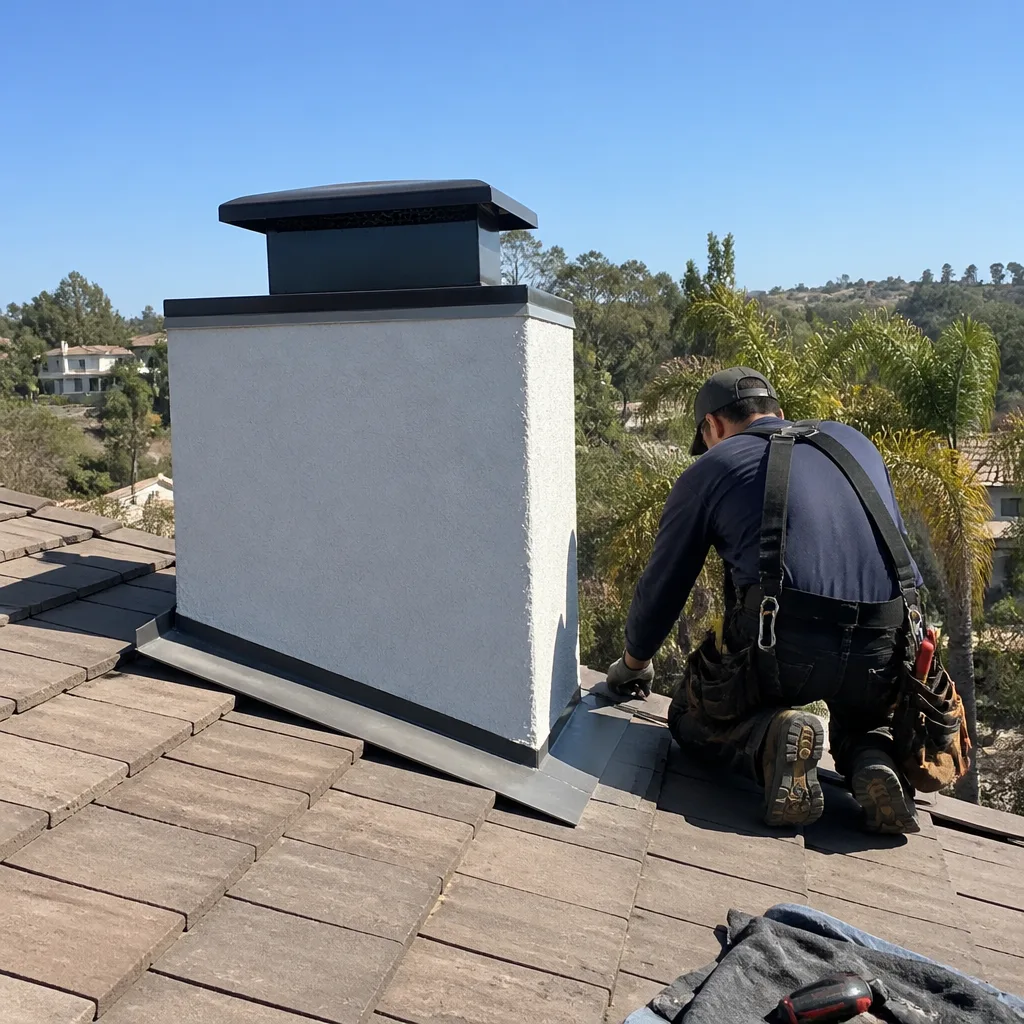 After
 Before
 After
 Before
 After